Helping Children Feel Safe, Understood, and Supported
Play and Expressive Art Therapies
Children do not always have the words to explain what they are feeling. Stress, anxiety, grief, family changes, friendship difficulties, trauma, school concerns, and emotional overwhelm may instead appear through behavior, withdrawal, anger, physical complaints, sleep changes, or difficulty concentrating.
At Mindful Inceptions, therapy with children is designed to be developmentally appropriate, supportive, and engaging. Children are given a safe space to express themselves, build emotional awareness, strengthen coping skills, and develop healthier ways of responding to life’s challenges.
Therapy is not about labeling a child as difficult, defiant, overly emotional, or problematic. It is about understanding what the child may be communicating through their behavior and helping them develop the skills they need to feel more secure, confident, and successful.
A Strong Background in School Counseling
My experience as a school counselor has given me a deep understanding of the academic, emotional, behavioral, and social pressures children experience throughout the school day.
I have worked directly with children, families, teachers, school administrators, special education teams, and other support professionals. This experience allows me to understand how emotional concerns may affect classroom behavior, attendance, friendships, academic performance, motivation, and a child’s overall connection to school.
My school counseling background also helps me recognize that a child’s behavior may look different depending on the environment. A child may appear calm at school but experience intense emotions at home, or they may struggle in the classroom while feeling more regulated in other settings.
When appropriate and with caregiver consent, therapy may include collaboration with school professionals to help support consistency between home, school, and counseling.
Infant and Toddler Mental Health Experience

My background in infant and toddler mental health has shaped the way I understand early emotional development, attachment, caregiver-child relationships, sensory needs, and nervous-system regulation.
Young children communicate through behavior, movement, play, facial expressions, and their relationships with caregivers. They may not be able to explain anxiety, sadness, fear, frustration, or confusion, but they often show these emotions through changes in sleep, eating, toileting, separation, tantrums, aggression, withdrawal, or difficulty adjusting to new situations.
Infant and toddler mental health work focuses on the child within the context of their most important relationships. Supporting caregivers is often an essential part of helping younger children feel safe and regulated.
Therapy may help caregivers better understand their child’s emotional cues, respond to challenging behaviors with greater confidence, strengthen attachment, and create routines that support emotional security.
Play as a Child’s Natural Language
Adults often communicate through conversation. Children frequently communicate through play.
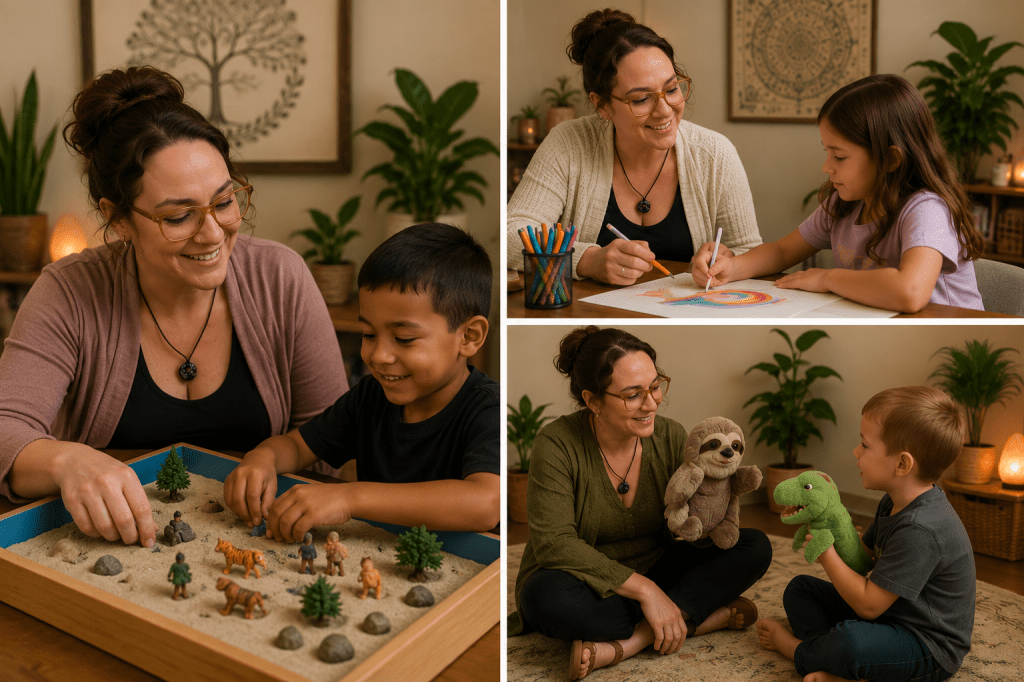
Play therapy techniques allow children to explore feelings, experiences, relationships, and problems in a way that feels natural and manageable. Through play, children can express emotions they may not yet understand or know how to describe.
Depending on the child’s age and needs, sessions may incorporate:
- Therapeutic games
- Dolls and figures
- Puppets and storytelling
- Sand tray activities
- Drawing and expressive arts
- Role-playing
- Emotion-identification activities
- Sensory and grounding tools
- Breathing and mindfulness exercises
- Movement and yoga-inspired activities
- Problem-solving and coping-skills practice
The purpose of play is not simply entertainment. Therapeutic play can help children process experiences, develop emotional language, practice new responses, improve self-control, and feel more confident in their ability to handle difficult situations.
An Integrative Approach to Child Therapy
Every child is different, so treatment is individualized rather than based on a single method.
My work with children may incorporate Cognitive Behavioral Therapy, expressive arts, play-based interventions, movement, mindfulness, emotional-regulation strategies, attachment-focused support, and trauma-informed care.
Cognitive Behavioral Therapy can help children notice the connection between thoughts, feelings, and actions. Expressive arts provide another way to communicate through drawing, storytelling, music, or creative activities. Movement and mindfulness help children recognize physical signs of stress and practice ways to calm their bodies.
These approaches are adapted to the child’s developmental level, personality, interests, communication style, and comfort.
Supporting Emotional Regulation
Children are not born knowing how to manage intense emotions. Emotional regulation is a skill that develops through practice, safe relationships, and supportive guidance.
Therapy may help children learn how to:
- Identify and name emotions
- Notice how feelings show up in the body
- Recognize emotional triggers
- Use calming and grounding techniques
- Communicate needs respectfully
- Cope with frustration and disappointment
- Develop flexible thinking
- Build confidence and self-esteem
- Improve friendship and social skills
- Strengthen problem-solving abilities
- Recover after conflict or emotional overwhelm
The goal is not to prevent children from experiencing difficult emotions. The goal is to help them understand their emotions and respond in safer, healthier, and more effective ways.
Therapy for School-Age Children

School-age children may benefit from therapy when they are experiencing:
- Anxiety or excessive worry
- School avoidance
- Anger or frequent emotional outbursts
- Friendship or social difficulties
- Bullying
- Low self-esteem
- Family separation or divorce
- Grief and loss
- Trauma or frightening experiences
- Difficulty with transitions
- Attention or organization concerns
- Emotional challenges related to ADHD, autism, or other neurodivergent needs
- Changes in behavior, sleep, appetite, or academic performance
Therapy can also provide support before concerns become severe. A child does not need to be in crisis to benefit from learning emotional and coping skills.
Caregiver Involvement
Caregivers are an important part of a child’s support system.
The level of caregiver involvement will depend on the child’s age, developmental needs, treatment goals, and comfort. Some sessions may include the caregiver, while others may involve brief caregiver check-ins before or after the child’s individual session.
Caregivers may receive education, practical strategies, and recommendations for reinforcing therapeutic skills at home.
At the same time, children need an appropriate level of privacy to feel comfortable expressing themselves. Expectations regarding confidentiality and caregiver communication will be discussed at the beginning of services.
A Supportive and Affirming Environment
Children deserve to feel accepted for who they are.
I strive to provide an inclusive and affirming space that respects each child’s identity, family structure, culture, strengths, developmental differences, communication style, and lived experiences.
Children are not expected to behave perfectly or immediately feel comfortable. Trust develops gradually, and therapy moves at a pace that supports the child’s sense of safety.
Helping Children Build Skills for the Future
The skills children learn in therapy can support them far beyond the counseling room. By learning to understand emotions, communicate needs, build relationships, manage stress, and recover from difficult experiences, children can develop greater resilience and confidence as they grow.
At Mindful Inceptions, the goal is to help children feel seen, supported, and capable while helping caregivers better understand and respond to their child’s emotional needs.
Contact Mindful Inceptions to learn more about child therapy services, caregiver consultations, and current availability.

